

7 Silent Processes That Drive Chronic Disease Long Before Symptoms
And how lifestyle can shift your trajectory

‘Feeling fine’ is not always a reliable indicator of long-term health.
Many of the diseases that become more common with age develop silently for years, or even decades, before any symptoms appear.
This is one of the key challenges with chronic disease.
The good news is that many of the biological processes driving these conditions can be strongly influenced by how we live.
So today, I want to bring attention to 7 of the most important processes, and share the simple, practical lifestyle strategies you can start adopting to help influence each one.
1. Chronic inflammation
Chronic inflammation is when your immune system stays slightly switched on all the time - because everyday exposures make the body react as if it’s being exposed to a threat like an infection or injury, even when there isn’t one.
It’s essentially a mismatch between modern living and a system designed for short-term threats, not constant activation.
Over time, this creates the biological conditions in which cardiovascular disease, dementia, and some cancers can develop more easily.
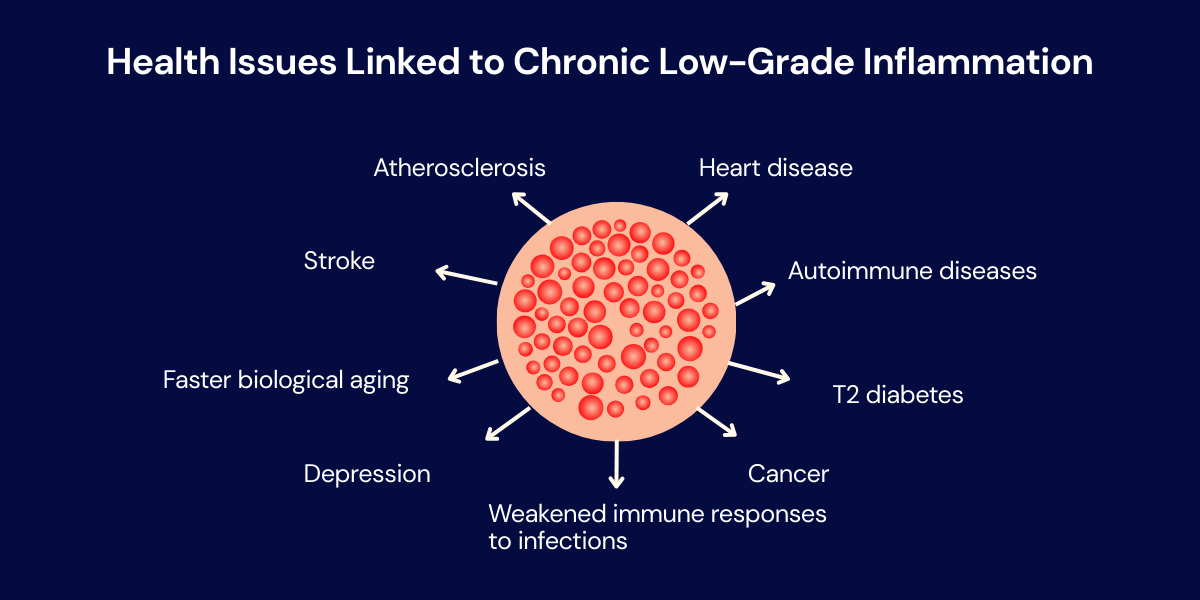
Main drivers: Excess visceral fat (fat stored deep around the organs, often seen as a larger waistline), ultra-processed diets, poor sleep, chronic stress, prolonged sitting, smoking, and alcohol.
Protective factors: Regular movement (walking + aerobic exercise + resistance training), a whole-food diet (high in fibre), omega-3 fats, stress management, and healthy social connection.
2. Insulin resistance
Insulin is a hormone that helps move glucose (sugar) from your blood into your cells after you eat.
It’s like a key that unlocks cells so they can use glucose for energy.
In insulin resistance, the “locks” stop responding properly. So glucose stays in the blood for longer, and the body has to produce more and more insulin to force the effect.
Over time, this creates several problems:
Type 2 diabetes
Cardiovascular disease: high insulin and high glucose promote inflammation, fat storage in arteries, and blood vessel damage
Dementia: the brain becomes less efficient at using glucose - its main fuel - so energy supply drops, and over time this can impair brain function (it’s often called “type 3 diabetes”)
Main drivers: Excess calorie intake, frequent high-sugar foods and drinks, visceral fat, and physical inactivity.
Protective factors: Maintaining muscle mass (your body’s largest glucose sink), post-meal walking (which can significantly reduce glucose spikes), high-fibre meals, and spacing meals out (reduces insulin demand and improves sensitivity).
3. Endothelial dysfunction
The endothelium is the thin inner lining of your blood vessels. It is metabolically active and helps regulate blood flow.
Healthy vessels produce nitric oxide - a molecule that helps them relax, stay flexible, and stay open so blood can flow easily.
When the endothelium becomes damaged, nitric oxide levels drop. Blood vessels become stiffer, inflammation increases, and early plaque starts to form in the artery wall.
This is one of the key early steps in cardiovascular disease (heart attacks + strokes).
Main drivers: High blood pressure (physical stress on vessel walls), repeated blood sugar spikes, smoking, and physical inactivity.
Protective factors: Regular aerobic exercise (boosts nitric oxide), omega-3s, and plant compounds from foods like beetroot, dark chocolate, tomatoes, and berries, all of which have demonstrated vascular benefits in clinical research.
4. Mitochondrial decline
Mitochondria are tiny structures inside almost every cell that convert food and oxygen into ATP - the energy your cells run on.
With age and certain lifestyle factors, they become less efficient. They produce less energy and more reactive oxygen species - unstable molecules that can damage other cells when they build up.
Over time, this contributes to lower energy levels, poorer metabolic health, and is linked to neurodegenerative disease.
Main drivers: Physical inactivity, chronic overeating (calorie excess), chronic inflammation, smoking, alcohol, and long-term oxidative stress.
Protective factors: Aerobic exercise (stimulates mitochondrial biogenesis - the creation of new, more efficient mitochondria), regular meal spacing, antioxidant-rich foods (berries, leafy greens, olive oil), and mild hormetic stressors like cold exposure or sauna use.
5. DNA damage
DNA is the instruction manual inside every cell. It tells cells how to function, divide, and repair themselves.
Every day, DNA is exposed to things like oxidative stress, radiation, toxins, and other normal metabolic processes. Our cells are equipped with repair systems, but problems arise when damage outpaces repair.
Over time, this can lead to mutations that cause cells to behave abnormally. This is one of the core processes involved in cancer development.
Main drivers: Chronic inflammation (creates a chemically stressful environment), smoking (contains 70+ known carcinogens that damage DNA), sunburn, alcohol, and processed meats (ham/bacon).
Protective factors: Antioxidant-rich foods (berries, leafy greens, cruciferous vegetables), regular exercise, quality sleep (DNA repair processes are most active at night), and safe sun exposure.
6. Gut dysbiosis
The gut microbiome is made up of trillions of tiny microbes that help digest food and regulate immunity, inflammation, and even aspects of brain function.
Gut dysbiosis is an imbalance: too few beneficial microbes and too many harmful ones.
When this happens, the gut produces fewer protective compounds, the gut lining becomes weaker, and small irritants can “leak” into the body and trigger inflammation.
Over time, this has been linked to poorer metabolic health, faster aging, and cognitive decline.
Main drivers: Low fibre intake, ultra-processed foods, repeated antibiotic use, chronic stress, and low plant diversity.
Protective factors: 30g+ of fibre per day, eating 30+ different plant foods each week, fermented foods (kefir + yoghurt = these introduce live beneficial bacteria), polyphenol-rich foods (berries, olive oil, tea), stress management, and spending time in nature.
7. Weakened immunity
Most people think the immune system is simply there to fight infections.
But it is also a 24/7 surveillance system that clears damaged cells, removes potentially cancerous cells, and helps control inflammation.
As we age, it naturally becomes less efficient - a process called immunosenescence. It becomes slower and less precise, so harmful cells are more likely to slip through.
Age-related immune decline is associated with higher risk of many diseases, including cancer, cardiovascular disease, and dementia.
Our daily inputs provide the building blocks the immune system needs to function properly.
Main drivers: Poor sleep, chronic stress (high cortisol can suppress immunity), inactivity, and poor nutrition.
Protective factors: Exercise (mobilises immune cells via blood/lymph flow), adequate protein, quality sleep, sunlight (vitamin D), micronutrient sufficiency (zinc, vitamin C, omega-3s).
Final Thoughts
These are the 7 biological processes I believe are worth everyone understanding.
If there’s one core message to take away, it’s this:
Focus on the basics, and be consistent with them.
Move your body every day in different ways - walking, lifting, and some higher-intensity work across the week. Eat mostly whole foods, with plenty of colourful plant diversity. Sleep enough, at consistent times. Limit harmful exposures like smoking, alcohol, and refined sugar. And manage stress in ways that work for you.
It doesn’t require perfection. Your body is resilient and adaptable - it just needs the right inputs, most of the time, to function well.
Thanks for reading!
Have a great weekend,
Ollie
Disclaimer: This post provides educational information based on scientific research and is not medical advice. It does not establish a doctor-patient relationship. Always consult a qualified healthcare professional before making lifestyle changes, addressing medical conditions, or starting new treatments.

Such a nice read, and the point on mitochondrial decline is the one that many miss entirely. Reactive oxygen species building up because mitochondria are inefficient is the mechanism behind the brain fog and low energy that gets blamed on stress or ageing by default. Worth noting that chronic high cortisol accelerates several of these processes simultaneously, inflammation, insulin resistance, and immune decline included, which is probably why a stressful job feels like it ages people faster than the calendar does, thanks for sharing this..
Great advice that we have known instinctively, viscerally for a very long time before the science ran the experiments that proved it. Eat well, exercise, learn, socialize and sleep. The difficulty lies in doing it in a society that bombards us from birth with incessant messaging to do otherwise or risk missing out on the good life. Until we accept and teach our children a different, simpler, understanding of what a good life looks like a very large percentage of people are going to remain caught up in patterns that are incompatible with long term health. Unfortunately, the consumption machine that fuels everything that we take for granted in our modern world needs us not to do that. The house of cards that is our economy collapses if we do. Catch-22.